
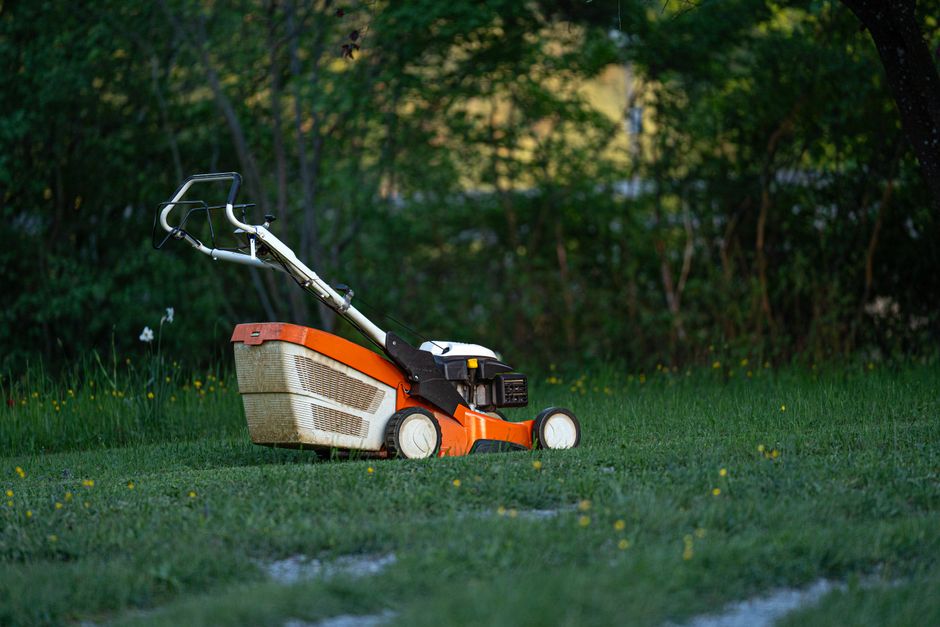
Most Melbourne lawn problems are caused by mowing, not by weather, soil, or drought. The scalping. The dull blades. The once-a-month schedule that leaves 20 cm of grass to deal with all at once. Small mowing decisions compound over a season into bare patches, thatch, and a lawn that looks permanently stressed. Here are the seven most common mowing mistakes, what they actually do to your grass, and how to stop making them. For broader lawn care context, see our guide on how to revive a neglected Melbourne lawn.
Mistake 1: Cutting too short — scalping
Cutting the grass too short removes all the green leaf material and exposes the brown stem and crown below. The lawn looks brown and dead in the affected patches. Beyond aesthetics, short grass has a smaller leaf area to photosynthesize, develops shallower roots that are more vulnerable to heat and drought stress, and provides less shading to the soil surface — which makes the soil drier and weed seeds easier to germinate.
The fix: know the right mowing height for your grass type and never go below it. For buffalo grass, 40 to 50 mm. For couch, 20 to 30 mm. For kikuyu, 25 to 40 mm. When in doubt, cut higher not lower.
Mistake 2: The one-third rule — cutting off too much at once
Removing more than one-third of the grass blade height in a single mow causes serious stress to the plant. The grass has to redirect energy into blade regeneration rather than root development. This weakens the plant's overall health and drought resilience over time.
The fix: if the lawn has grown past the point where you can reach the target height in one pass, mow at a higher setting first, then come back a week later at the lower target height.
Mistake 3: Mowing with blunt blades
A dull mower blade tears the grass blade rather than cutting it cleanly. The torn ends turn brown and ragged, giving the lawn a dull, grey-brown appearance within days of mowing. Torn grass is also more susceptible to fungal infection at the wound site. A sharp blade cut is invisible on a healthy lawn within a few days as the cut edge dries cleanly.
The fix: sharpen or replace mower blades at least once per season, more frequently on large lawns or when mowing on sandy soil (which dulls blades much faster). If the lawn looks brown within 48 hours of mowing, check the blade first.
Rather not think about any of this?
Professional mowing on a regular schedule, the right height for your grass type, blades always sharp. Book a regular visit.
Mistake 4: Irregular mowing — letting it grow too long between mows
In Melbourne's spring and summer, most warm-season grasses grow fast. A lawn left for three or four weeks in October can go from perfect to a shaggy mess requiring the one-third rule across multiple sessions. The irregular growth cycle that comes from sporadic mowing also makes the lawn harder to maintain consistently — you are always playing catch-up.
The fix: commit to a schedule that matches the season. Weekly or fortnightly in spring and early summer, every 2 to 3 weeks through summer, and monthly or less in winter. The lawn tells you how often it needs mowing.
Mistake 5: Mowing in the same direction every time
Always mowing in the same direction causes the grass to lean in that direction over time. It also creates compaction tracks under the mower wheels in the same positions each mow. These compaction lines can create visible striping in the lawn after a while.
The fix: alternate the mowing direction each session. Mow north-south one week, east-west the next. The lawn will stand more upright and the cut will be more even.
Mistake 6: Mowing wet grass
Mowing a wet lawn does several things, none of them helpful. The wet clippings clump and stick to everything — mower deck, grass surface, you. The clumped clippings on the lawn surface can smother the grass beneath. And wet grass under a mower spreads any fungal disease across the entire lawn surface, not just where it was.
The fix: wait until the lawn surface is dry before mowing. In Melbourne spring, early afternoon mowing is generally better than early morning when dew sits on the grass.
Mistake 7: Ignoring the edges
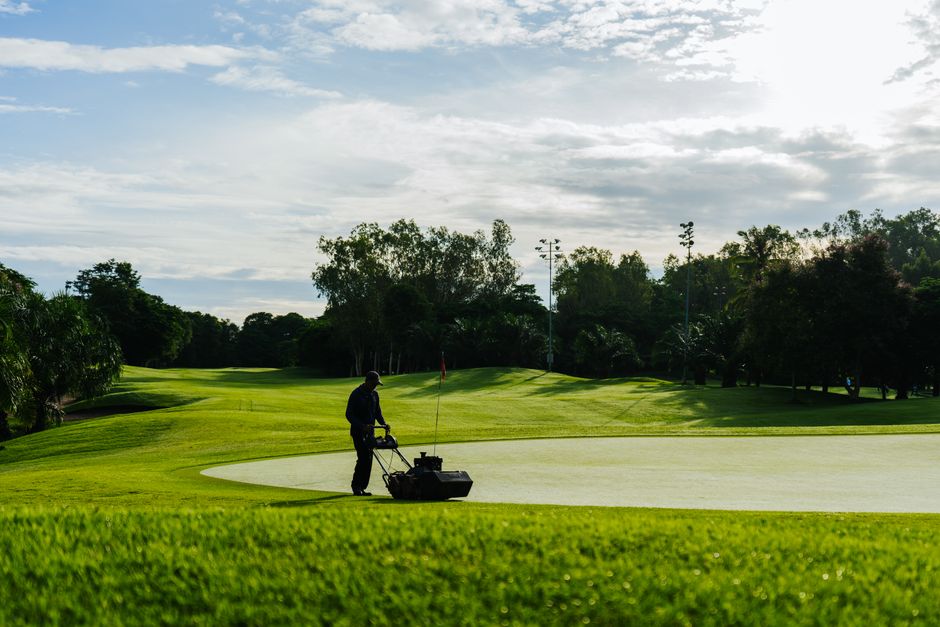
A mowed lawn with unedged edges looks half-finished. The crisp line where the lawn meets the path, garden bed, or driveway is often the most visually striking element of a well-maintained garden. It takes five minutes with a half-moon edger or a lawn edger attachment to achieve this, and the visual difference is significant.
FAQ: Lawn mowing mistakes in Melbourne
Why does my lawn look brown after mowing?
Three common causes: dull blades (torn grass ends turn brown), mowing too short (exposed stem material below the green leaf zone), or mowing in the heat of the day in summer (mowed grass is stressed by heat exposure). Check the blade first — it is the most common culprit.
How short should I mow my Melbourne lawn?
It depends on your grass type. Buffalo grass: 40 to 50 mm. Couch: 20 to 30 mm. Kikuyu: 25 to 40 mm. Fescue (cool-season blends): 40 to 60 mm. Never go below the minimum for your species, particularly in hot conditions. See our guide on the best grass types for Melbourne if you are unsure what you have.
How often should I mow my lawn in Melbourne?
In spring and early summer: weekly to fortnightly. In summer: fortnightly to every 3 weeks. In autumn: monthly. In winter: occasionally, or not at all depending on the species and conditions. The right frequency depends on how fast your grass grows, which varies by species, fertiliser, water, and temperature.
Can I mow the lawn if it has not rained for two weeks?
Yes — drought-stressed grass is fine to mow if you are cutting at the right height and not removing too much. If the lawn is visibly very dry and stressed, cut at the higher end of your grass type's range to leave more blade area for moisture retention and photosynthesis. Cutting stressed grass short makes the stress worse.
